
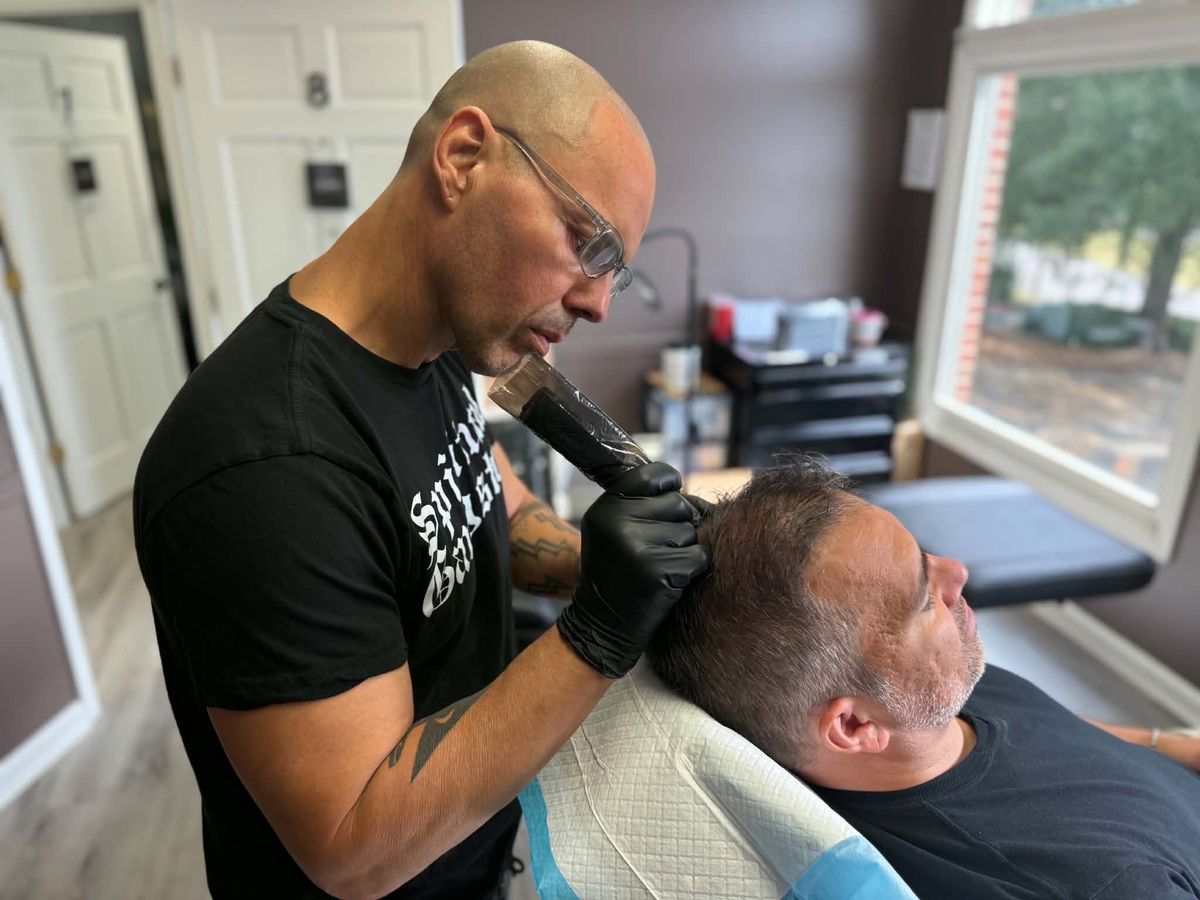
Restore Your Hairline in Knoxville
SMP KNOX uses scalp micropigmentation to create the appearance of natural hair follicles—restoring hairlines, adding density to thinning hair, and creating a fuller, more defined look without surgery.
Scalp Micropigmentation Transformation
Watch how SMP restores confidence
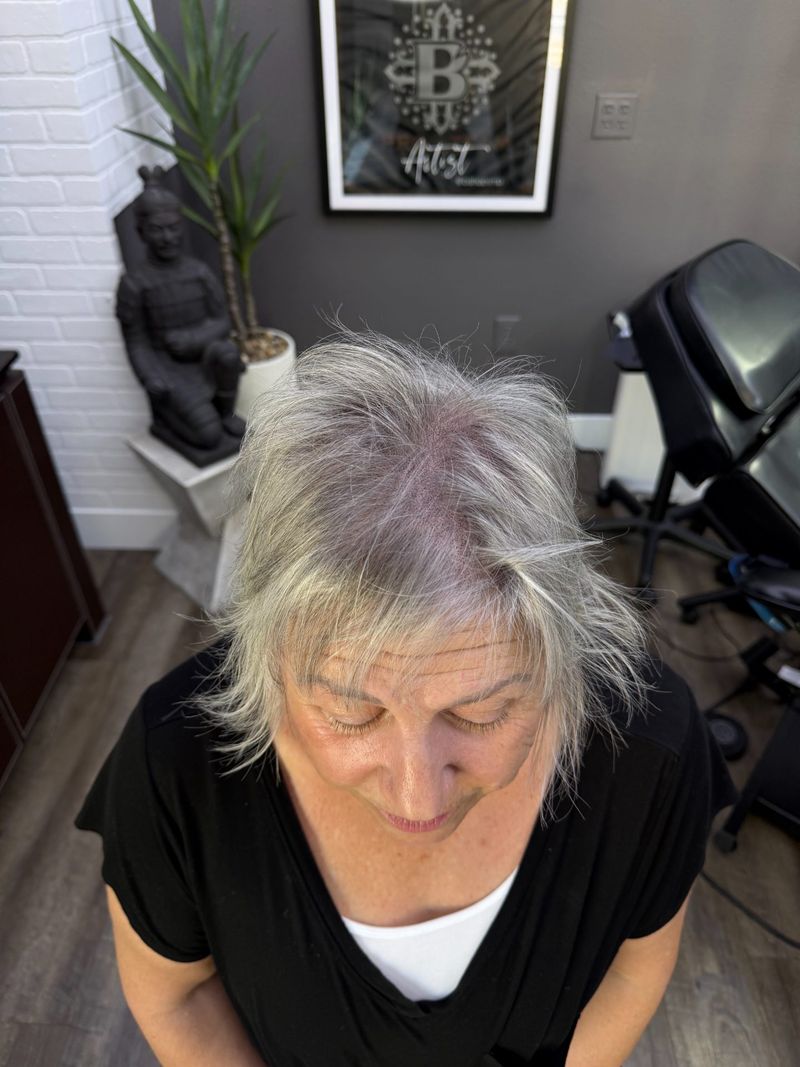
Debbie's Story
Debbie's 1st Density Fill
Justin's 1st Density Fill
What We Do
Non-surgical, permanent scalp micropigmentation — tailored to your hair loss and the look you want.
The SMP KNOX Look
Sharp, natural, undetectable scalp micropigmentation in Knoxville.
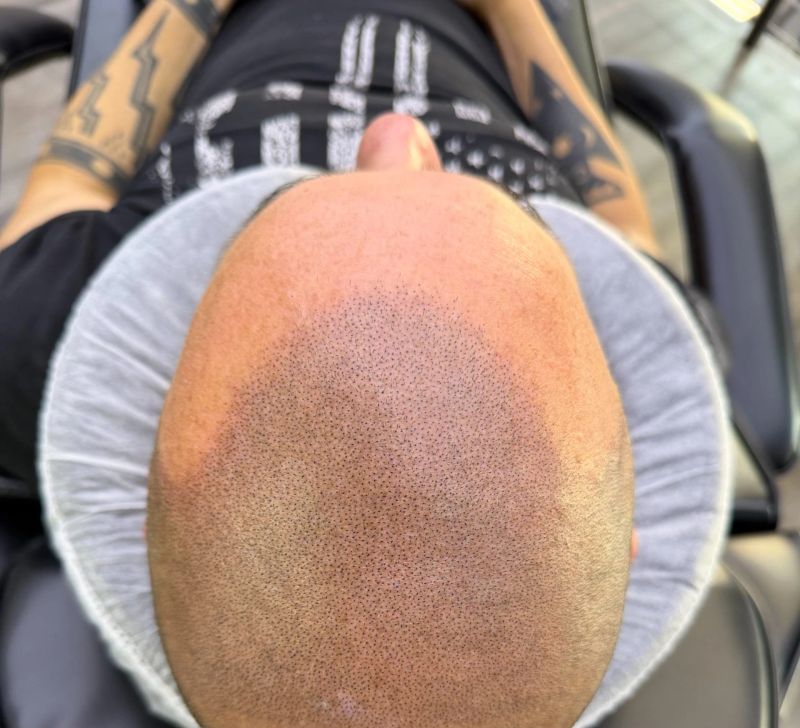
 After
After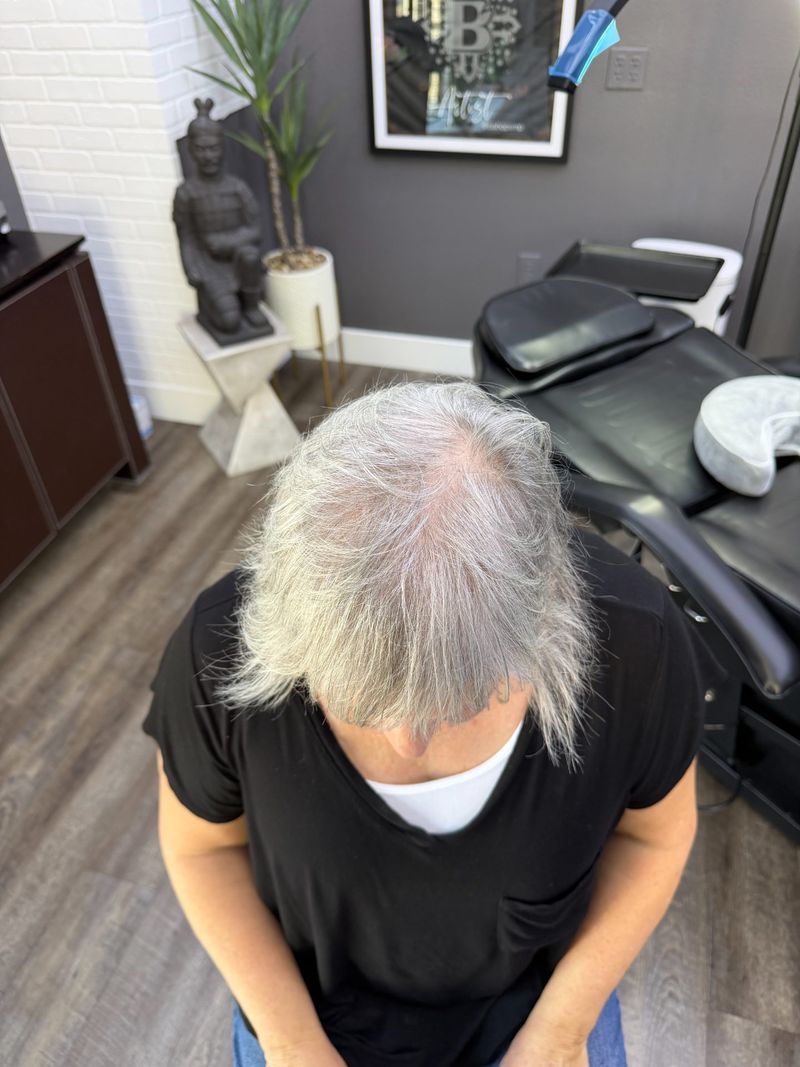 Before
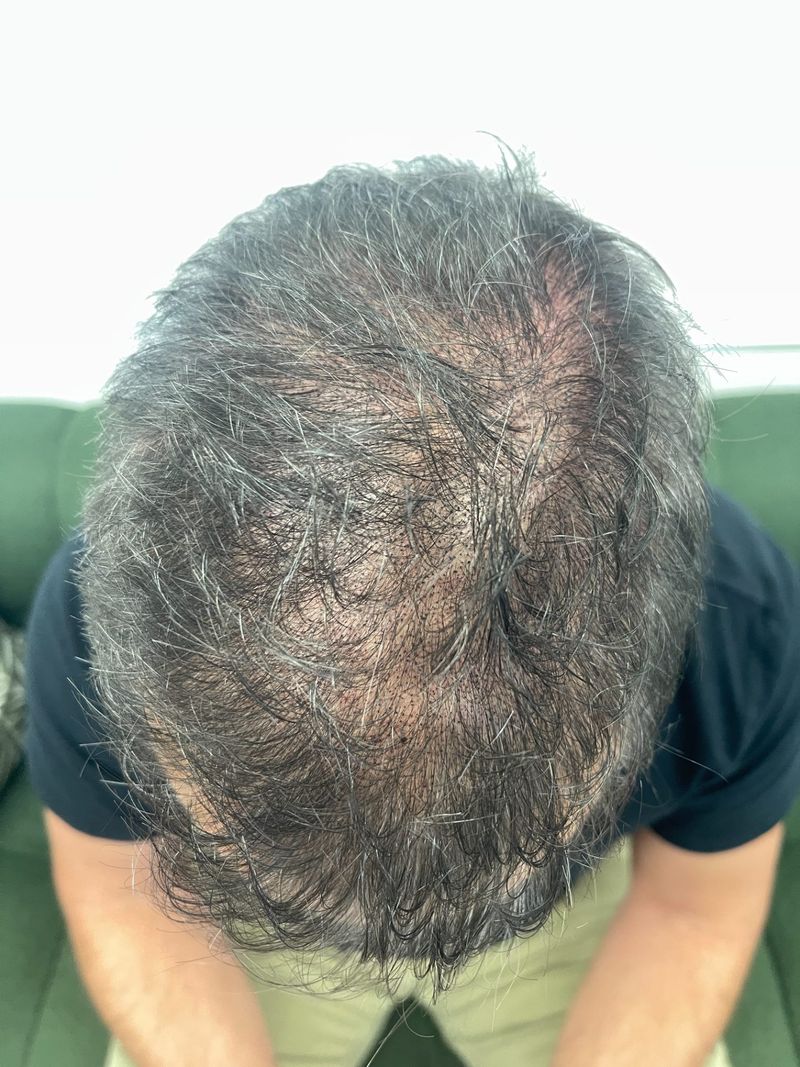 After
After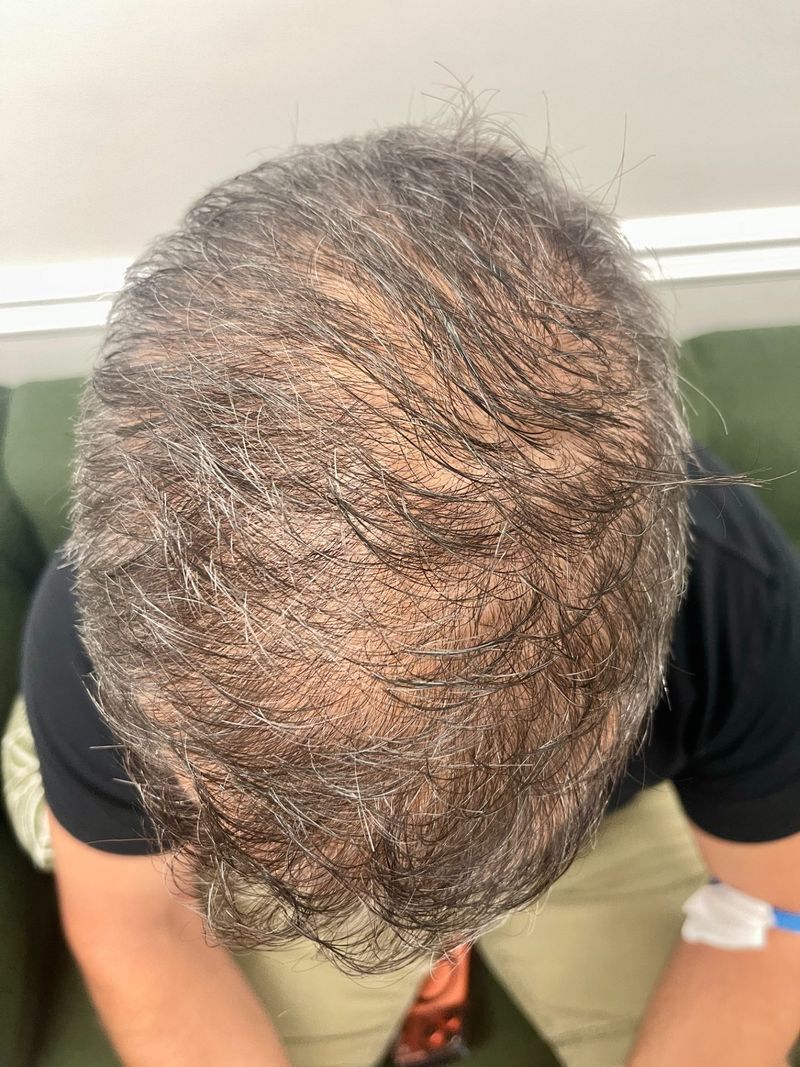 Before
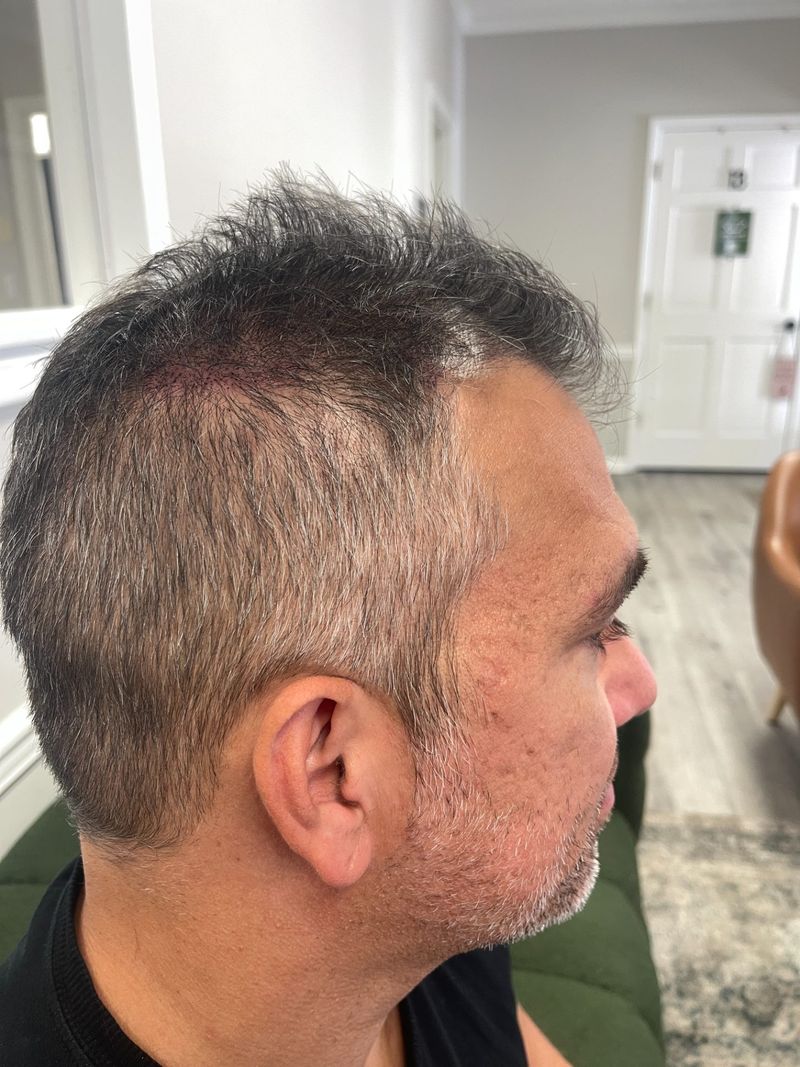 After
After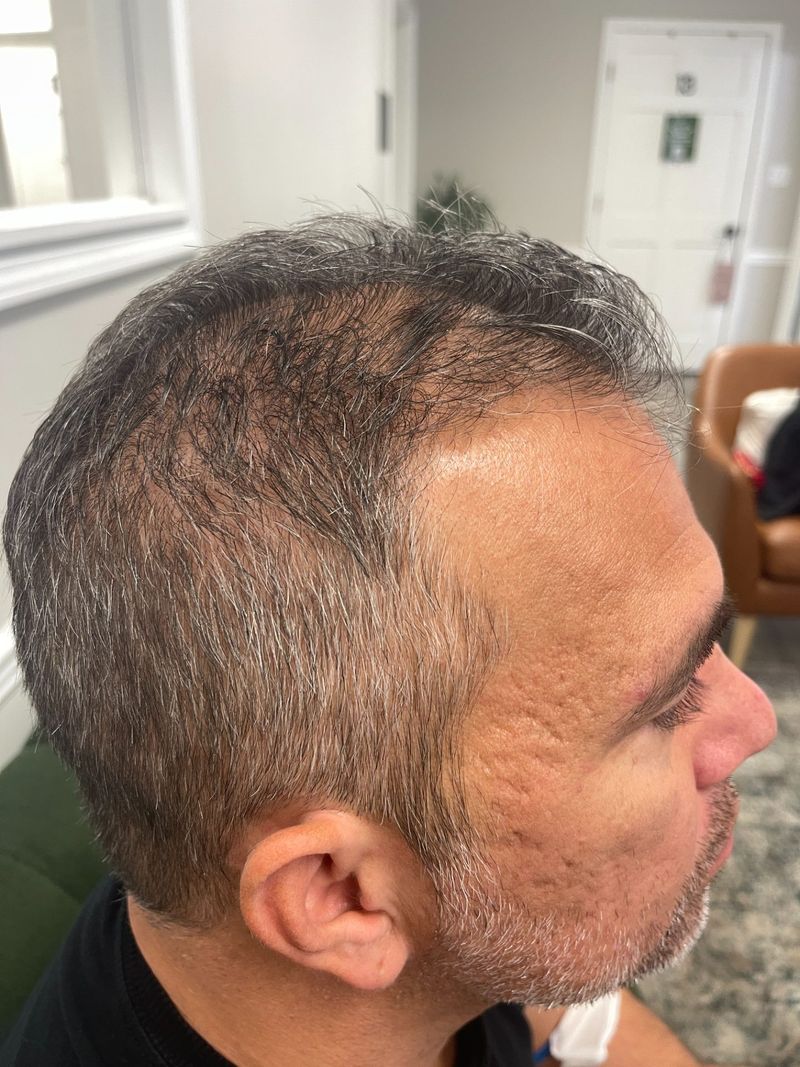 Before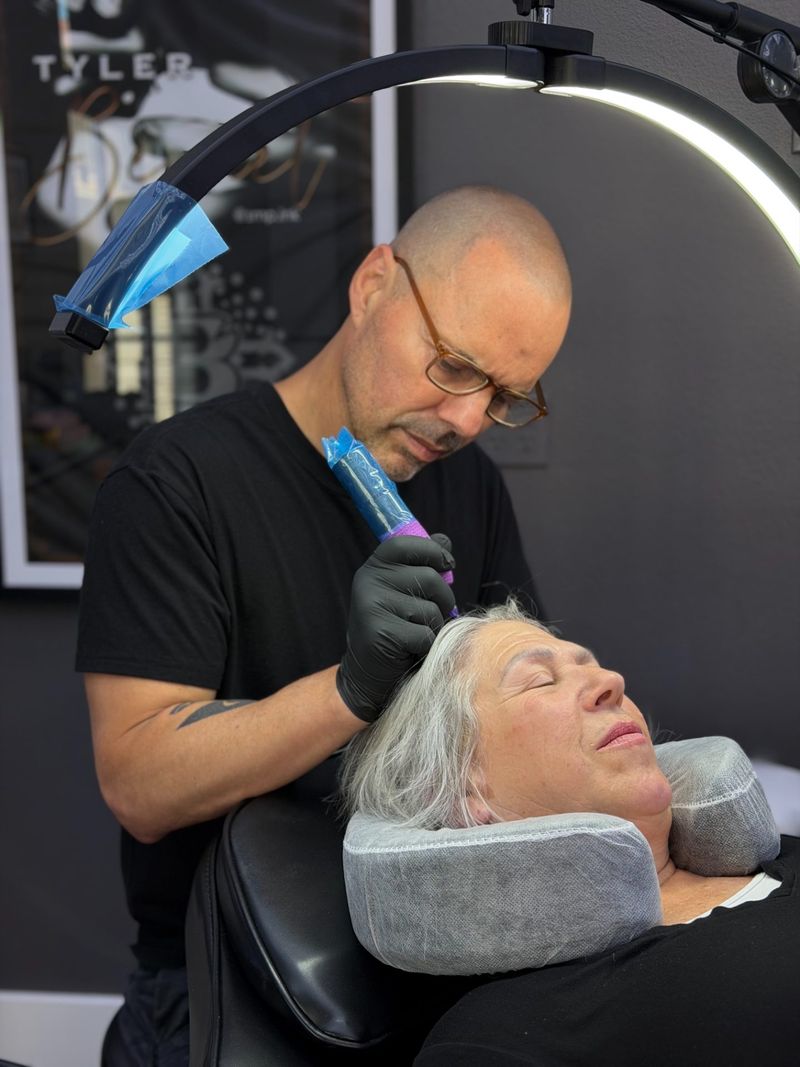
What is SMP?
Scalp micropigmentation, or SMP, is a non-surgical way to improve the appearance of hair loss. Using a fine needle and specialized pigment, we create thousands of tiny impressions that replicate the look of natural hair follicles. When it's done correctly, those impressions blend with your existing hair and look like a natural part of your scalp.
What SMP can do really depends on your hair loss and the look you're going for. If you're bald or wear your hair closely shaved, we can recreate the look of a full, closely buzzed head of hair and restore a natural-looking hairline. If you still have hair but it's thinning, we can add pigment between your existing hairs to reduce how much scalp shows through and make your hair look fuller and denser.
SMP can also be used to rebuild a receding hairline, add density through the crown or part, and camouflage scars from hair transplants, injuries, or surgery. It's an option for both men and women, and because there's no surgery involved, there are no incisions or stitches and very little downtime.
But make no mistake—SMP is an art form. Great results don't come from simply putting pigment into the scalp. It takes serious training and skill to understand pigment, depth, impression size, spacing, density, and how to design a hairline that actually fits the person. The difference between SMP that looks natural and SMP that looks obvious often comes down to the skill and technique of the artist.
That's also why SMP is usually built gradually over multiple sessions. Each session allows us to build density, see how the pigment settles, and refine the result while keeping everything looking natural.
At SMP KNOX, we're not trying to give everyone the same hairline or the same treatment. We look at your hair loss, your features, your existing hair, and what you're hoping to achieve. Then we build the treatment around you, with one goal in mind: a natural-looking result that helps restore your confidence.
- ✓Non-surgical, no scarring, no downtime
- ✓Undetectable — follicles matched to your hair
- ✓Semi-permanent, with only occasional touch-ups
- ✓SMP specialists — it's all we do
From Consult to Confidence
A precise, staged process for a flawless, natural result.
Free Consultation
We assess your hair loss, talk through your goals honestly, design your hairline, and give you transparent pricing. No pressure.
First Session
We lay the foundation — placing follicles and building the base layer, matched to your hair color and skin tone.
Build & Refine
Over two to three sessions we build density and depth gradually, refining the hairline and blend for a flawless result.
Walk Out Sharp
Leave with an undetectable, natural, long lasting result — and a simple touch-up plan to keep it perfect for years.
Stop hiding under the hat.
Tired of being embarrassed about going bald or your thinning hair? Then do something about it! Let's restore your confidence!
SMP, Answered
Will scalp micropigmentation actually look natural, or obvious?
Absolutely! Looking natural is the entire point of good SMP. When it's done correctly, the impressions blend with your existing hair and scalp so people aren't looking at you thinking, “That's SMP.” They simply see a natural hairline, a closely shaved head, or fuller-looking hair. The unnatural, blotchy or “helmet” look people sometimes worry about usually comes down to poor technique—using the wrong pigment, going too deep, making impressions too large, or adding too much density too quickly. Real hair follicles aren't perfectly uniform, and SMP shouldn't be either. That's why we carefully control the size, depth, spacing and placement of each impression and select pigment based on your hair and skin tone. We also build the result gradually over multiple sessions instead of trying to create the finished look all at once. That allows us to build density, see how your skin responds, and refine the result along the way. During your consultation, we'll talk about your hair loss, the look you want, and what's realistic for you. If we're rebuilding a hairline, we'll design it with you so it fits your face, age and features before treatment begins. Natural isn't a bonus with SMP—it's the standard.
Does it hurt, and how many sessions will I need?
Most people are surprised by how manageable SMP is. You'll feel the needle, but it's generally described as a light scratching or stinging sensation and is typically much less intense than a traditional tattoo. Everyone's sensitivity is different, and certain areas of the scalp can be more sensitive than others, but most clients are comfortable enough to relax, talk, or listen to music during their session. Most SMP treatments take 2–3 sessions. That's intentional. We build the result gradually, allowing the scalp to heal between sessions before adding more density, adjusting the blend, and refining the final result. Trying to create too much density in one session can actually work against the natural look we're trying to achieve. Sessions are generally spaced about 1–2 weeks apart, depending on how your scalp heals and the treatment we're doing. Once completed, SMP is semi-permanent and can last for years, with an occasional touch-up when the pigment naturally begins to soften or fade. During your free consultation, we'll look at your scalp, talk about what you want to achieve, and explain how many sessions we expect you'll need and what the treatment will cost before you decide to move forward.
How long does SMP last, and what's the upkeep?
SMP is a long-term, semi-permanent solution that typically lasts 3–5 years before a touch-up may be needed, although this varies from person to person. Your skin, lifestyle, sun exposure, and how your scalp holds pigment can all affect how quickly it fades. SMP won't wash off, sweat off, or rub off, and there's nothing you need to apply every morning. Over time, the pigment will naturally soften and lighten. When that happens, a touch-up can refresh the color, density, and definition and make adjustments as your hair changes or begins to grey. Day-to-day upkeep is minimal. Once your scalp has healed, one of the most important things you can do is protect it from excessive sun exposure with sunscreen or a hat. After each treatment, we'll also give you simple aftercare instructions to follow while your scalp heals. Beyond that, there's no daily product to apply, nothing that runs in the rain, and nothing rubbing off on your pillow. Once it's healed, you can stop worrying about maintaining it every day and simply enjoy the result.
Does SMP work for women, and for thinning hair rather than baldness?
Absolutely! SMP isn't just for men who are bald or want a shaved-head look. Some of the most rewarding work we do is helping men and women who still have their hair but are dealing with thinning or areas where more of the scalp is starting to show. For thinning hair, SMP works by placing pigment between your existing hairs. This reduces the contrast between your hair and the lighter scalp showing through, making the hair look fuller and denser. You keep your existing hair—we're simply creating the appearance of more density underneath it. For women, SMP can be especially effective for thinning along the part, hairline, or crown. The treatment is kept subtle and conservative so the goal isn't for anyone to notice the SMP. It's simply for your hair to look fuller and less scalp to show through. Whether you're dealing with a receding hairline, diffuse thinning, a widening part, or more extensive hair loss, SMP can be tailored to different situations for both men and women. During your free consultation, we'll look at your specific hair loss and existing hair and talk honestly about what SMP can—and can't—do for you.
Hit Us Up!
Tell us what’s going on with your hair and what you’d like to change. We’ll talk through your options, answer your questions, and see if SMP is a good fit for you. No pressure.